
Guided Wave Radar Level Transmitter
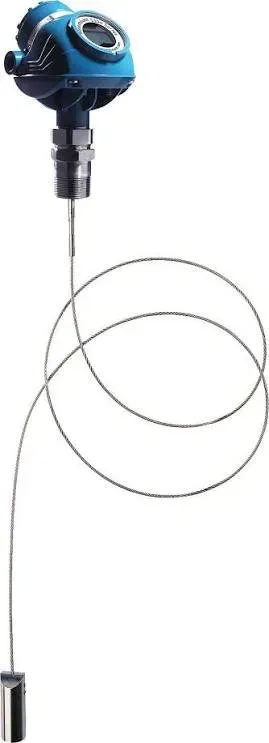
Radar along a probe instead of through free space: guided wave radar measures level and interface in narrow chambers, external cages and high-pressure vessels where non-contact radar cannot. Up to 50 m, to 345 bar and 400 °C, single or twin rod and cable probes in 316, duplex, Hastelloy or Alloy 825.
Guided Wave Radar Level Transmitter
Guided wave radar sends the microwave pulse down a rod or cable probe immersed in the product, so the signal is concentrated where it is needed instead of spreading through the vessel. The probe guides the pulse past internal obstructions, through narrow chambers and stilling wells, and through heavy vapour or foam that would scatter a free-space signal. It also measures interface: part of the pulse reflects from the upper liquid, the rest continues and reflects from the lower one.
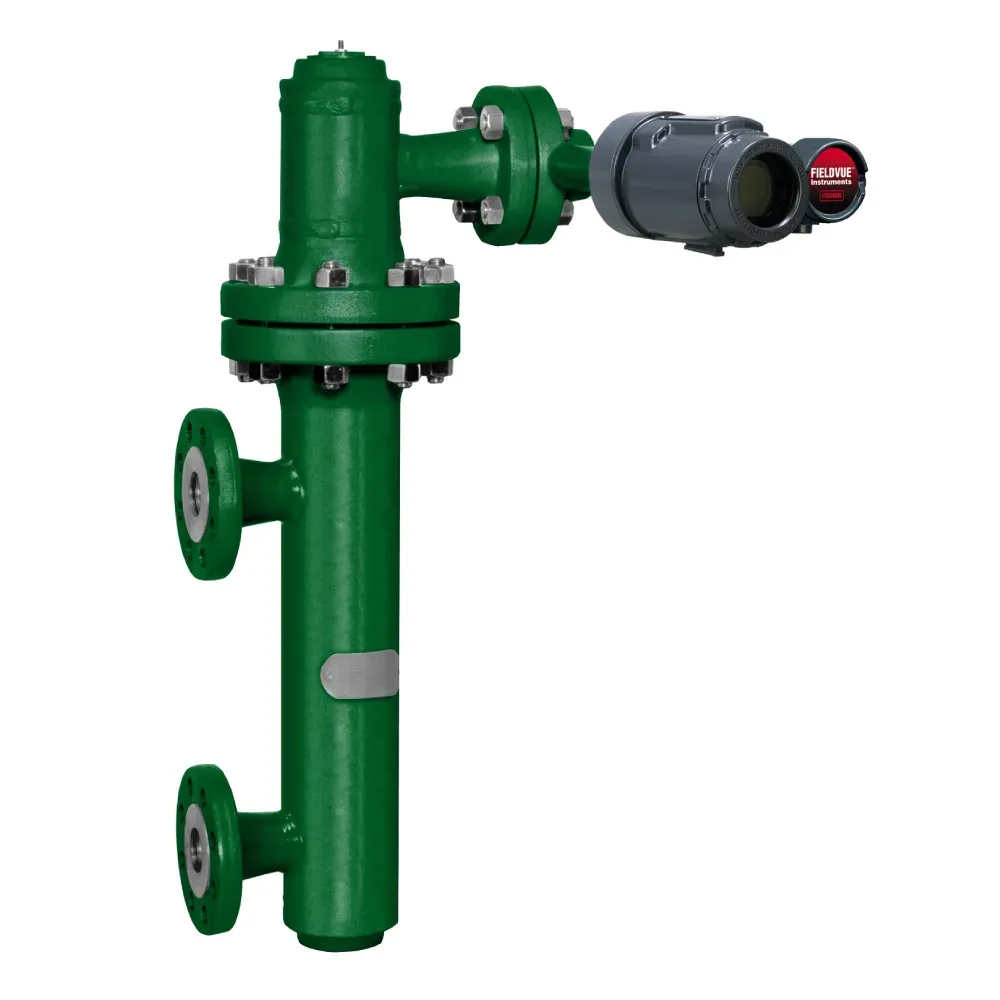
Transmitters measure up to 50 m at process conditions to 345 bar and 400 °C, which covers steam drums, high-pressure separators and boiler feedwater heaters. Probes are single rod, twin rod, coaxial or cable in 316 stainless steel, duplex, Hastelloy or Alloy 825, with PTFE-coated options for corrosive service; a heat sink protects the electronics on hot vessels, and centring discs and weights keep long probes in position. Mounting is top-mounted on a flange or thread, in a chamber, or side-mounted on an external cage where it is the modern replacement for a displacer.
Outputs are 4–20 mA HART, FOUNDATION Fieldbus or Modbus, with a verification reflector and smart diagnostics for proof testing without process interruption.
Applications are level and interface in high-pressure vessels, steam applications and external cages across oil and gas, petrochemical, refining, chemical and power generation.
Level
Spec it with our engineers
Send us your process conditions and we’ll recommend the right configuration — with a quote inside one business day.