
Displacer Level Switch
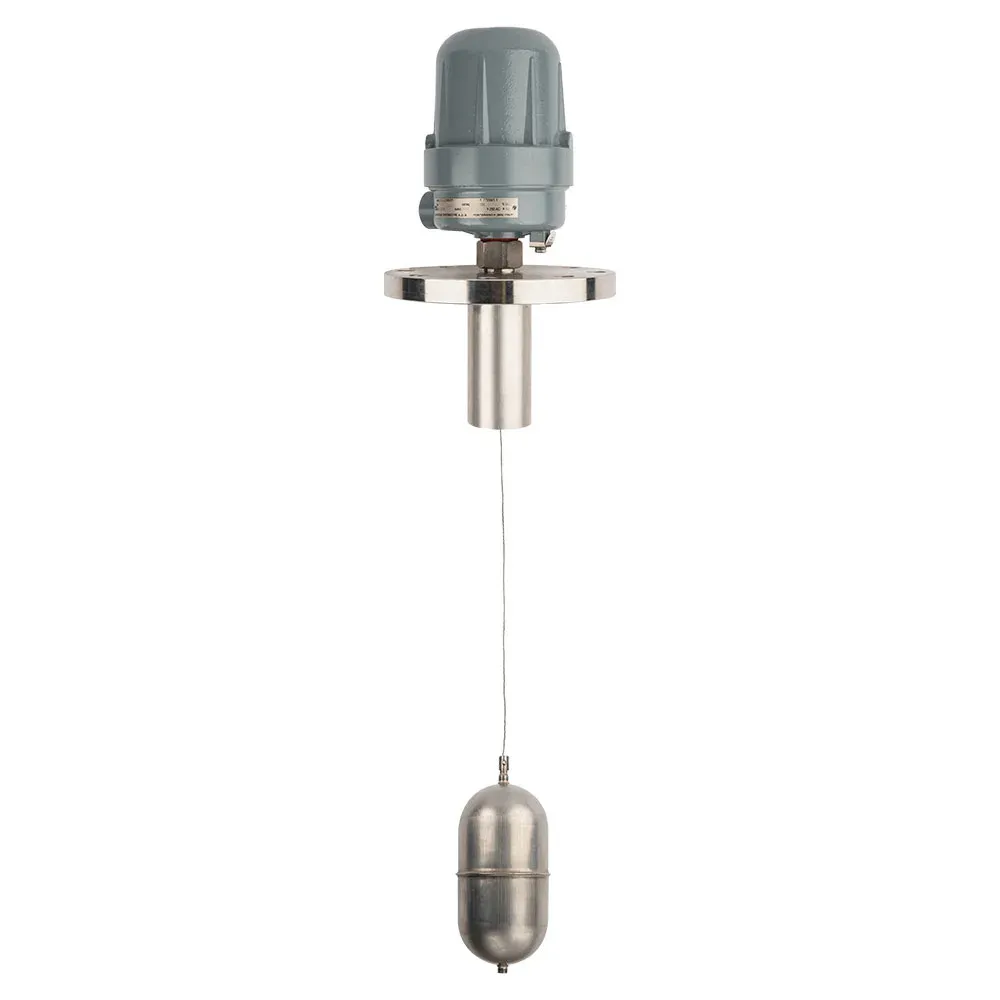
A level switch that uses a displacer on a spring instead of a float, for high pressure and a precise set point: to 400 bar and −100 to +400 °C, ranges 95 to 2,480 mm with ±7 mm adjustment, up to four switches for level and interface alarms, in carbon steel, 304, 316 or plastics.
Displacer Level Switch
Where a float switch runs out of pressure rating or set-point precision, the displacer switch takes over. A displacer, heavier than the liquid, hangs from a spring; as the level rises the displacer loses apparent weight, the spring retracts and a magnetic coupling operates the switch. The displacer is much smaller than a float of the same range, so the switch fits in narrow chambers and high-pressure nozzles, and several displacers on one suspension give multiple set points from a single connection.
Switches cover 95 to 2,480 mm with set-point adjustment of ±7 mm, for process conditions to 400 bar and −100 to +400 °C. Materials are carbon steel, 304 or 316 stainless steel, with PVC, PP or PVDF for corrosive chemicals at moderate conditions. Mounting is side-side, side-bottom, top-side or top-bottom with flanged, threaded or weld-stub connections, direct or in an external cage; up to four SPDT or DPDT switches with various ratings are fitted. Anti-frost protection and cooling fins suit cryogenic and hot service.
Because the trip depends on the displacer's apparent weight, it can be set to respond to a liquid-liquid interface as well as a liquid-vapour level.
Applications are level and interface control, high- and low-level alarms and high-pressure vessels in oil and gas and petrochemical plants, including separators, knock-out drums and compressor scrubbers.
Level
Spec it with our engineers
Send us your process conditions and we’ll recommend the right configuration — with a quote inside one business day.