Venturi Tube
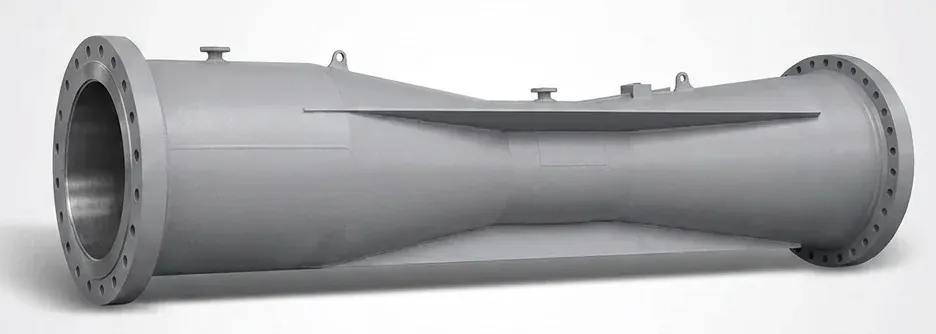
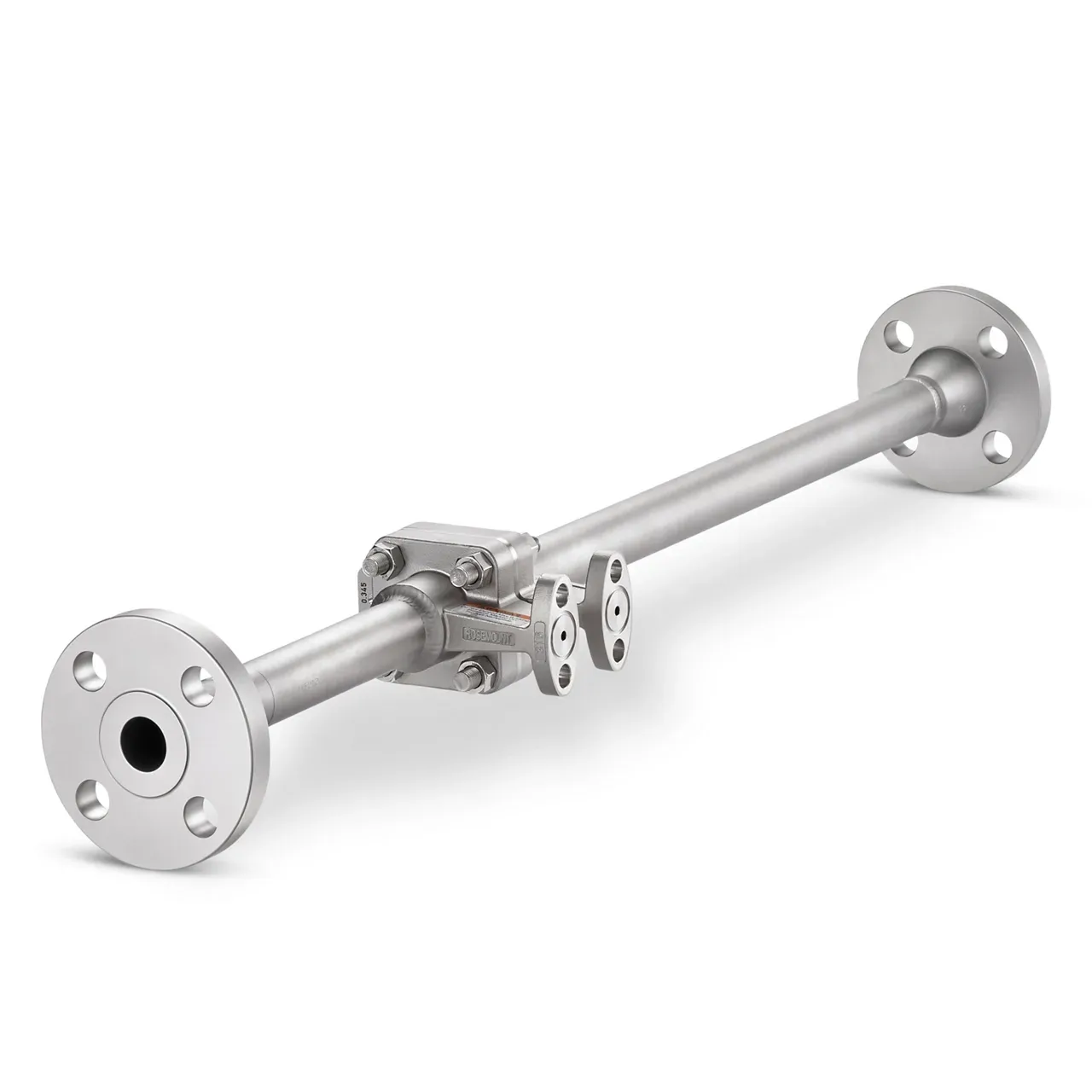
The low-loss differential-pressure element for large lines. A converging inlet, throat and long diverging outlet recover most of the pressure, leaving a permanent loss of only 10 to 20 % of the differential. Machined type to 10", welded-sheet type from 8" upwards, flanged or weld-in.
Venturi Tube
A venturi tube measures flow on the same principle as an orifice plate, by the differential pressure created when the fluid accelerates through a reduced section, but its gradual diverging cone recovers most of the pressure downstream. Where an orifice loses 50 to 90 % of its differential permanently, a venturi loses only 10 to 20 %. On a large pipeline running continuously, that difference is measured in pump or compressor energy every hour of the year.
Two constructions are offered. The machined venturi, up to 10", is turned from solid or forged material for the best accuracy and surface finish. The welded-sheet venturi, from 8" upwards, is fabricated from rolled plate for the large sizes typical of water, cooling and gas transmission lines. Standard material is AISI 316; other materials follow the customer's pipeline specification, as does the pressure rating and temperature limit. Connections are flanged (RF or RTJ), butt-weld or weld-in, with or without annular chambers for averaging the tap pressure around the circumference.
The venturi is also tolerant of dirty and solids-laden fluids because there are no sharp edges or dead zones to collect debris.
Accessories include condensate pots, isolation valves and flow straighteners. Venturis are used in oil and gas, petrochemical, chemical, power generation and water plants, and each is supplied with its calculation to ISO 5167.
Flow
Spec it with our engineers
Send us your process conditions and we’ll recommend the right configuration — with a quote inside one business day.