
Single Temperature Sensor (RTD & TC)
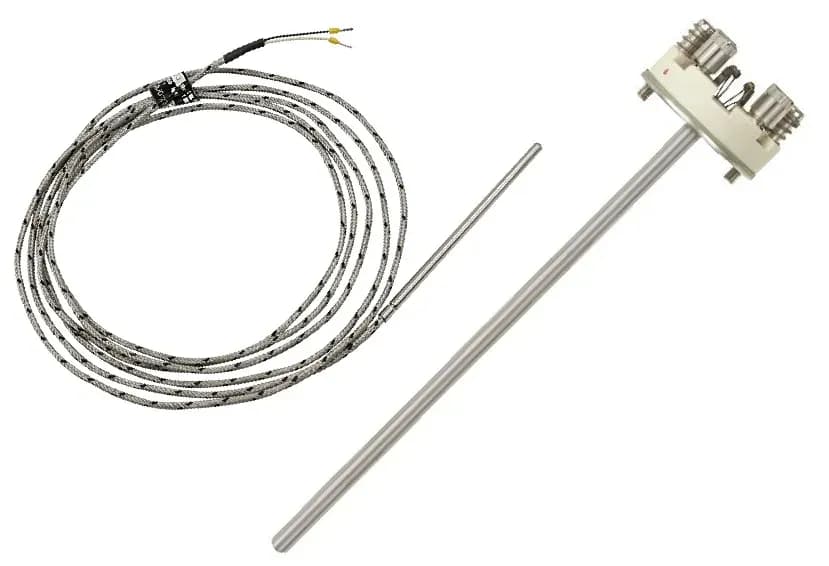
Mineral-insulated Pt100 RTDs and Type T, J, E, K, R and S thermocouples for process and laboratory measurement from −200 to +1,500 °C. Supplied as bare inserts or complete assemblies with connection head, spring-loaded insert, nipple, union and thermowell, to IEC 60751 and IEC 60584-1.
Single Temperature Sensor (RTD & TC)
A temperature sensor assembly is the point where the process meets the control system, and it is almost always built to order: element type, insertion length, sheath material, process connection and head are chosen for each tag. Two sensing technologies cover the range. The platinum RTD (Pt100) gives the best accuracy and stability from −200 to +850 °C and is the default for most process duties; the thermocouple extends to +1,500 °C and responds faster, so it is chosen for furnaces, exhausts and small or fast-changing measurements.
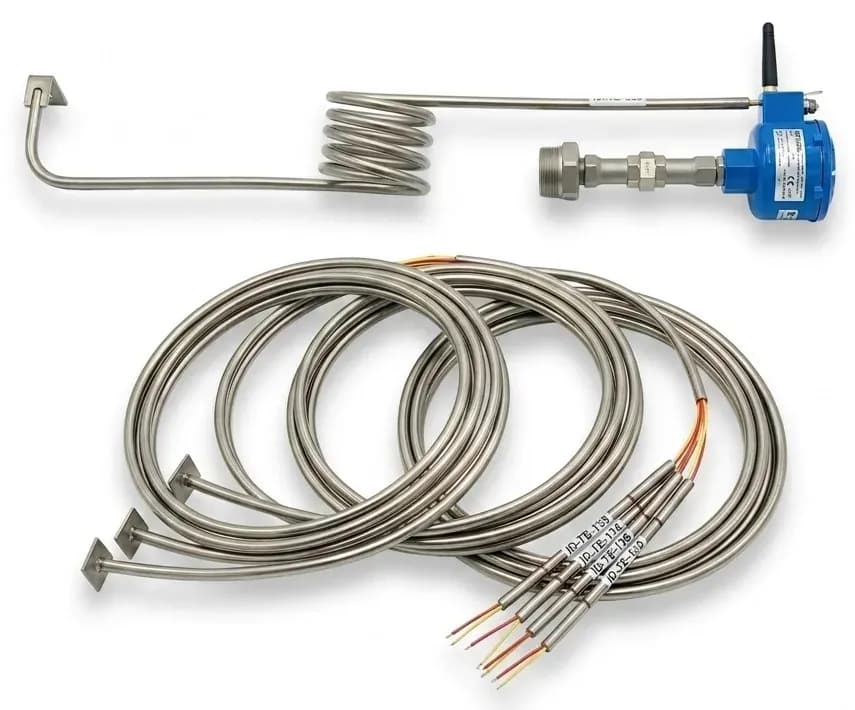
RTDs are wired 2-, 3- or 4-wire, with 3-wire the usual compromise between accuracy and cable cost, and thermocouples use matching extension or compensating cable to the transmitter. Elements are mineral-insulated with compacted magnesium oxide in 316, 316L or Hastelloy sheaths, or in ceramic protection tubes for high-temperature service, and are made as single or dual elements for redundancy or hot backup. Accuracy follows IEC 60751 (Class AA, A or B) for RTDs and IEC 60584-1 for thermocouples.
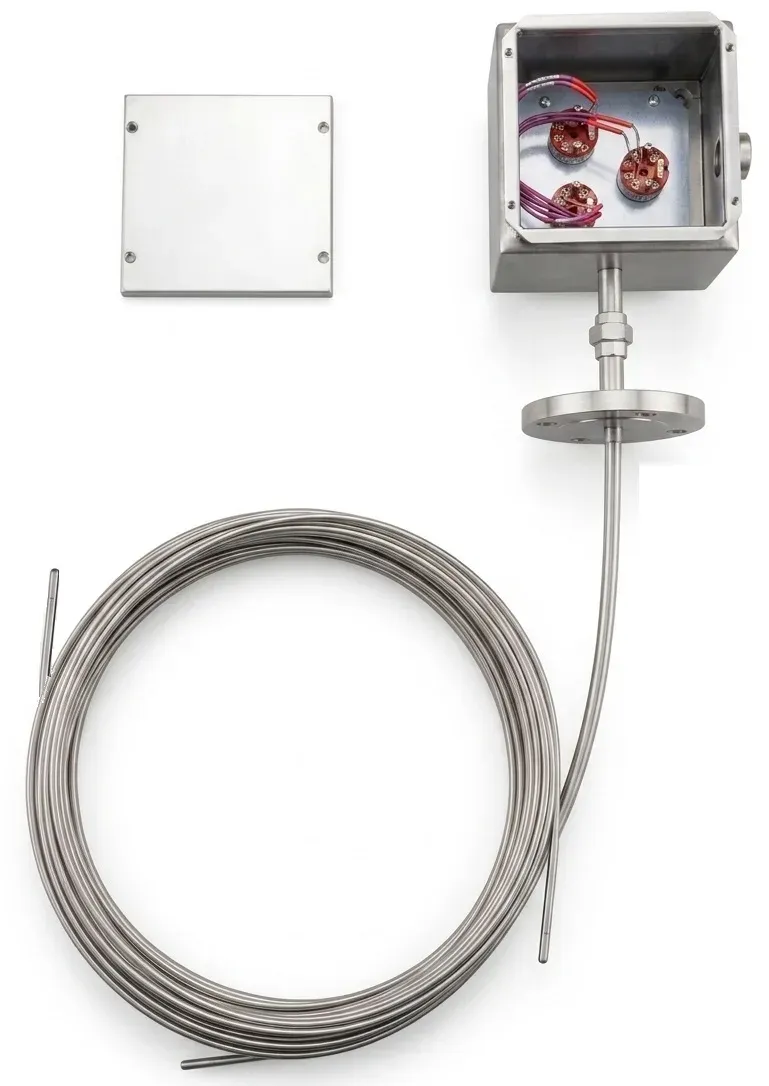
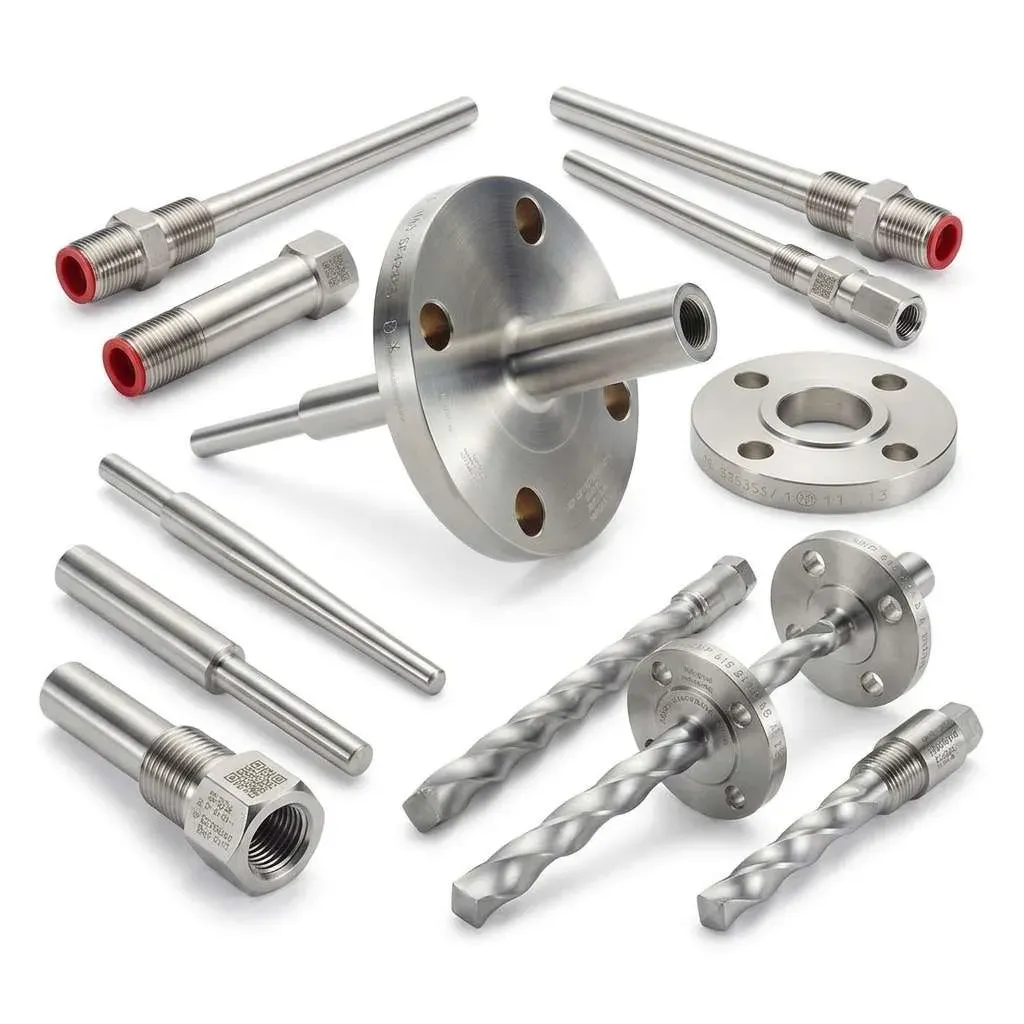
Pressure and corrosion resistance come from the thermowell, not the sensor, so the sensor is normally specified together with a well and a spring-loaded insert that keeps the tip in contact with the well bottom under vibration. Accessories are connection heads, nipples, unions and thermowells, with head-mounted transmitters where a 4–20 mA or fieldbus signal is required.
Users span process industries, manufacturing and research laboratories.
Temperature
Spec it with our engineers
Send us your process conditions and we’ll recommend the right configuration — with a quote inside one business day.