Melt Temperature Sensor
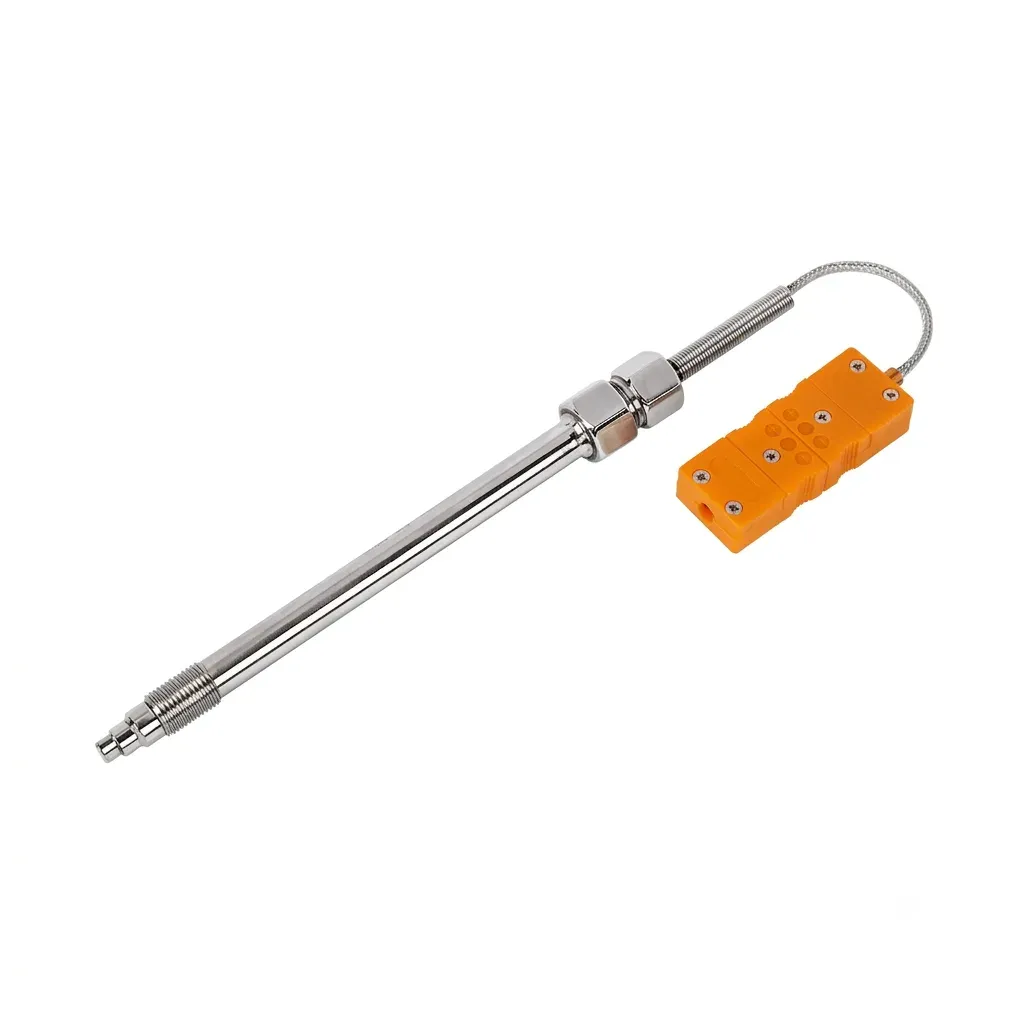
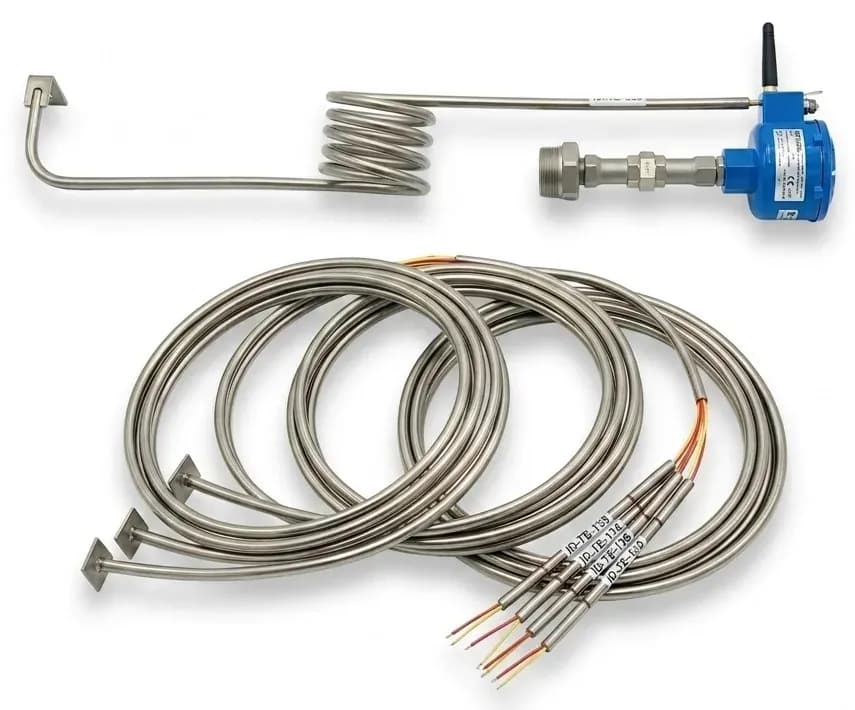
Thermocouple sensors built for the polymer melt: threaded into the extruder barrel or die with flat, round, tapered or elliptical tips, rod lengths of 90 or 153 mm and immersion of 5 to 25 mm. Type J or K, single or double, in 316, 316Ti, Hastelloy C4 or titanium.
Melt Temperature Sensor
Melt temperature is the process variable that decides the quality of an extruded or moulded polymer product, and it has to be measured in the melt itself, under pressure, with a sensor that fits the standard tapped holes of the machine. Melt temperature sensors are thermocouples in a rigid rod that screws into the barrel, adapter or die alongside the melt pressure transmitter.
The element is a Type J or K thermocouple, single or double, grounded or ungrounded, covering −40 to +400 °C with Class 2 tolerance to IEC 60584-1. The tip geometry is chosen to suit the position: flat tips sit flush with the barrel wall for an undisturbed flow, while round, tapered and elliptical tips project into the melt for a faster and more representative reading. Rod lengths are 90 or 153 mm with immersion lengths from 5 to 25 mm to match the mounting thread and machine design. Sheath materials are 304, 316 and 316Ti stainless steel, Hastelloy C4 or titanium for corrosive or abrasive compounds.
The output is the thermocouple millivolt signal, taken to the machine controller through extension cables and connectors; stainless steel sheathing and extension pipes protect the lead in the hot machine environment.
Melt temperature sensors are used throughout plastics and polymer manufacturing on extrusion lines, compounders and injection-moulding machinery, and are normally ordered together with the melt pressure transmitter.
Temperature
Spec it with our engineers
Send us your process conditions and we’ll recommend the right configuration — with a quote inside one business day.