
Conductive Level Switch
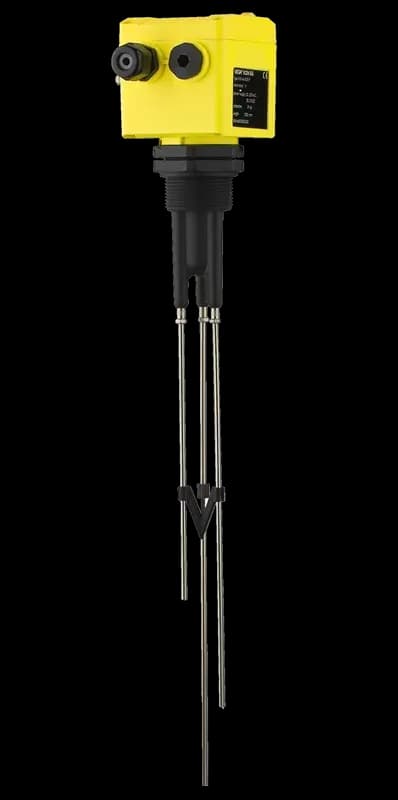
The simplest level switch for conductive liquids: rod or cable electrodes detect water by completing a low-voltage circuit through the liquid. Multi-electrode assemblies give pump start, stop and overflow points from one connection. To 20 m, 63 bar and −50 to +150 °C, 316 electrodes in PTFE, PP or FEP, with controllers and line-break monitoring.
Conductive Level Switch
Conductive level switching relies on the liquid itself to close a circuit. A low AC voltage is applied between an electrode and a reference, either a second electrode or the metal tank; when conductive liquid touches the electrode a small current flows and the controller operates a relay. With several electrodes of different lengths on one fitting, a single unit provides pump start, pump stop, high alarm and overflow points, which is why conductive switches are standard on sumps, pits, wet wells and water tanks.
Electrodes are 316 stainless steel rods for short ranges or cables to 20 m for deep tanks, insulated with PTFE, PP or FEP so that only the tip is active, and mounted vertically through a G½ to G1½ threaded connection at process conditions to 63 bar and −50 to +150 °C. The controller, mounted in the panel or on the switch head, provides relay, SPDT or DPDT outputs with adjustable sensitivity for liquids of different conductivity; line-break monitoring modules detect a broken electrode cable, and multi-rod assemblies are built to the tank drawing.
The technology requires a conductive liquid, so it does not suit oils, solvents and deionised water; for those, choose the capacitance or vibrating fork switch.
Applications are water and wastewater, pump control, overflow protection and dry-run protection in water, wastewater, utilities, chemical and general industry.
Seviye
Mühendislerimizle birlikte belirleyin
Proses koşullarınızı iletin; doğru konfigürasyonu önerelim ve bir iş günü içinde teklif verelim.