Fork Density Meter
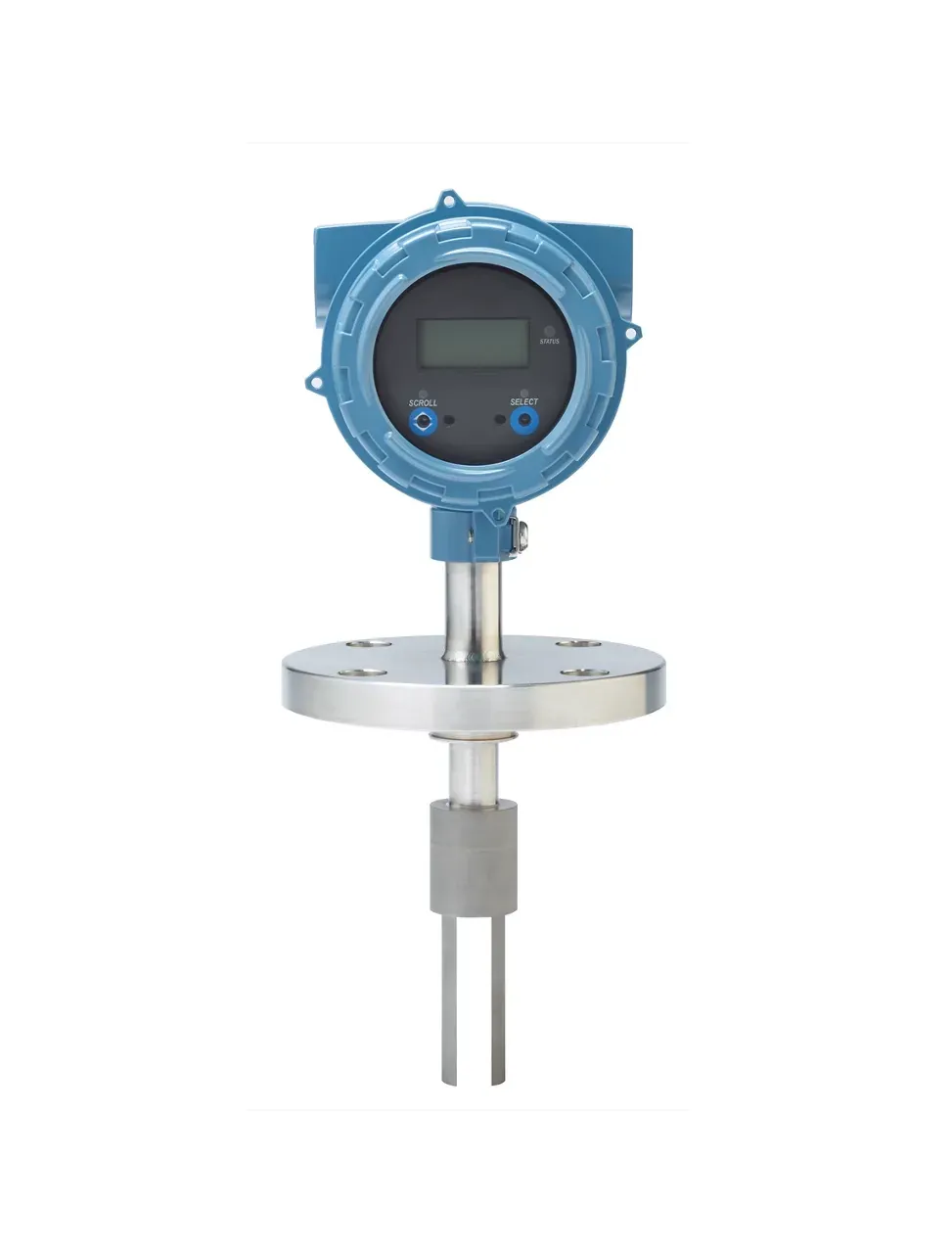
A vibrating fork inserted directly into the pipe or vessel measures liquid density with ±1 kg/m³ accuracy, with no bypass or sampling. Stem lengths to 4 m, viscosities to 500 cP, to 207 bar and 200 °C, in 304L, 316L, Hastelloy C22, titanium, zirconium or DLC-coated, with HART, Modbus and WirelessHART.
Fork Density Meter
The fork density meter is the direct-insertion alternative to a Coriolis density meter. Two tines are driven to resonate in the liquid; the resonant frequency falls as the density of the liquid surrounding them rises, and the transmitter converts the frequency to density with temperature compensation from an integrated sensor. Because the fork mounts straight into the pipe, tank or bypass through a single connection, there is no slipstream to keep flowing and no pressure loss.
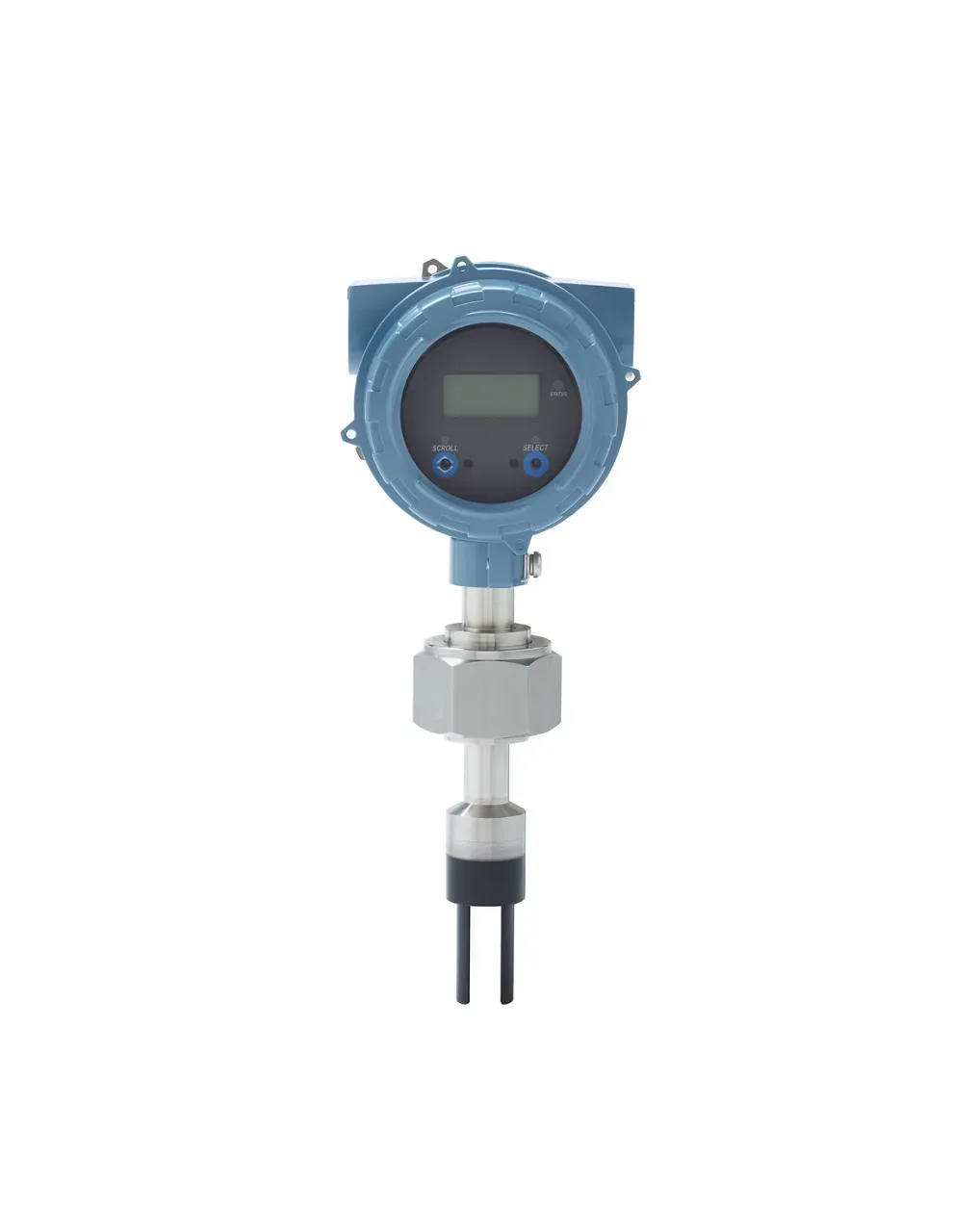
Accuracy is ±1 kg/m³ over 0 to 3,000 kg/m³ for liquids with viscosities up to 500 cP, at process pressures to 207 bar and temperatures from −50 to +200 °C. Stem lengths up to 4 m allow measurement deep inside tanks and separators. Wetted parts are 304L or 316L stainless steel, Hastelloy C22, titanium, zirconium or DLC-coated for abrasive service, with electro-polished options for hygienic duty.
Outputs are 4–20 mA HART, Modbus RS-485, TPS (time-period signal), discrete and WirelessHART, so the meter can be installed on remote tanks without cabling. A local LCD, ProLink III configuration software, QR asset tag and KDV (known density verification) diagnostics support commissioning and maintenance.
Typical uses are interface detection in pipelines and separators, concentration and blending control, tank contents verification, slurry solids content and fiscal density on crude and product lines.
Spec it with our engineers
Send us your process conditions and we’ll recommend the right configuration — with a quote inside one business day.